
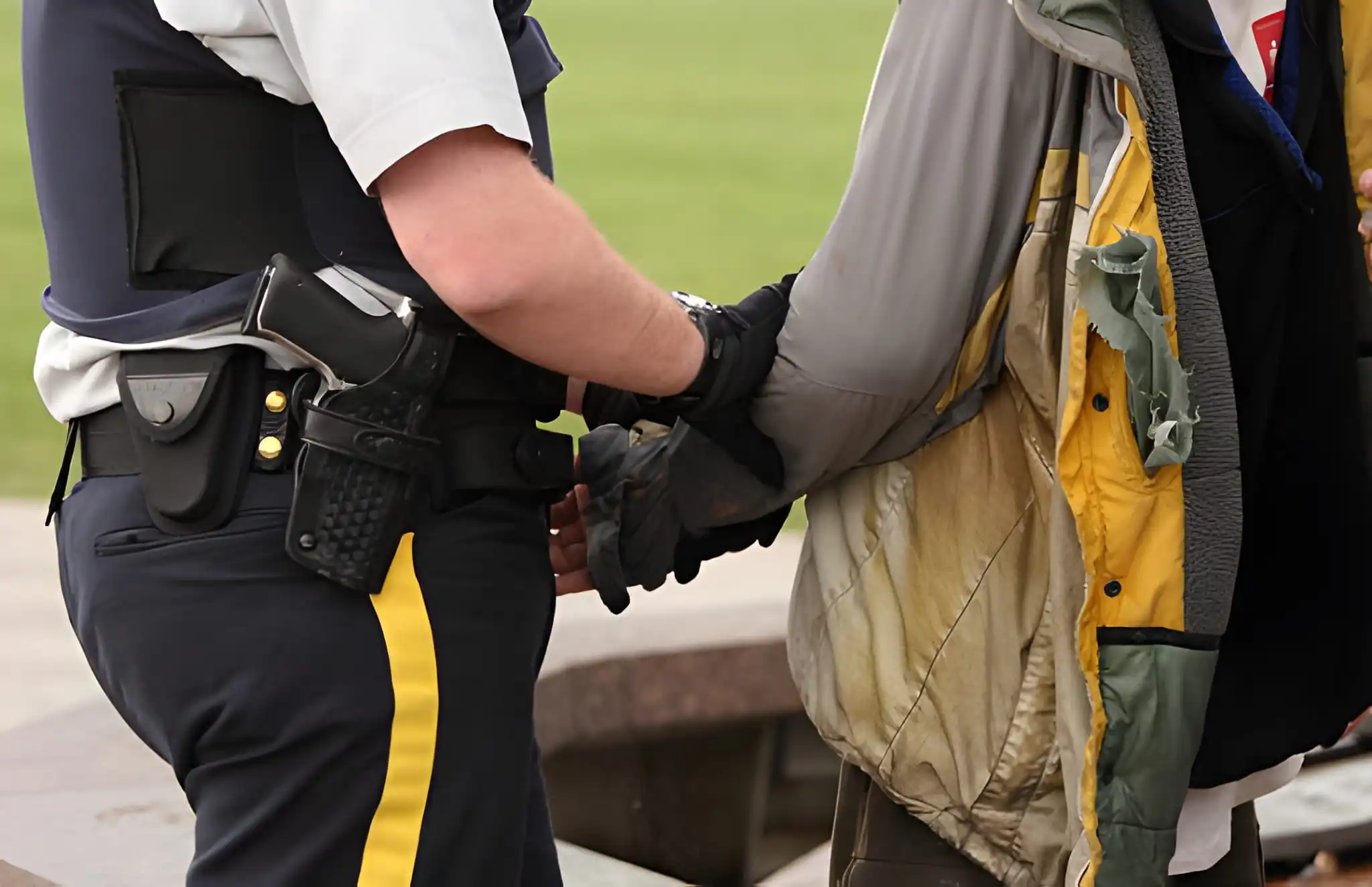
The hours immediately following a criminal arrest are the most critical for your defence. Decisions you make—or fail to make—in these first 24 hours can determine whether you beat the charges or face conviction. Understanding what happens during a Brampton arrest and how to protect yourself is essential.
What Happens During a Peel Regional Police Arrest
When Peel Regional Police arrest you in Brampton, the process typically unfolds like this:
At the arrest location:
- Police inform you that you’re under arrest and state the charge
- You’re advised of your right to counsel and right to remain silent
- You’re searched for weapons and evidence
- You’re handcuffed and transported to a division (often 21 or 22 Division)
At the police station:
- Booking procedures (fingerprints, photographs)
- Personal property inventory
- Placement in a holding cell
- Opportunity to contact a lawyer
- Police may request a statement
Release or bail hearing:
- Many accused are released on conditions within hours
- More serious charges may require a bail hearing within 24 hours
- Conditions are imposed restricting your freedom
Each stage presents opportunities to protect yourself—or make devastating mistakes.
The Single Most Important Rule: Silence
The moment police indicate you’re under investigation or arrest, exercise your right to remain silent.
What to say:
- “I want to speak with a lawyer.”
- “I’m exercising my right to remain silent.”
- “I won’t be making any statements.”
Then stop talking. Do not:
- Explain your side of the story
- Try to justify your actions
- Provide your version of events
- Answer “just a few quick questions”
- Engage in casual conversation about the incident
“The most damaging evidence in criminal cases often comes from the accused’s own mouth. People believe explaining themselves will help, but statements to police are almost never helpful and frequently provide exactly what the Crown needs for conviction,” says renowned Criminal Lawyer in Brampton, Alexander Karapancev from Karapancev Law.
Why Your Statement Will Hurt You
Police are trained interrogators skilled at obtaining incriminating statements. Common tactics include:
Minimization: “It’s not that serious, just tell us what happened.”
Appealing to fairness: “We’ve heard her side, don’t you want to tell yours?”
Implying leniency: “If you cooperate, it will go better for you.”
False urgency: “This is your chance to explain before charges are laid.”
These tactics work. People provide statements believing they’re helping themselves, but:
- Prosecutors use statements to prove elements of offences
- Minor inconsistencies are portrayed as dishonesty
- Explanations intended to exonerate become admissions
- Even truthful statements can be misinterpreted
Example: You say “I pushed her away because she was hitting me.” Intended meaning: self-defence. Prosecutor’s interpretation: admission of assault with weak self-defence claim lacking reasonable force.
Your Right to Contact a Lawyer
Section 10(b) of the Charter guarantees your right to speak with a lawyer upon detention or arrest. Police must:
- Inform you of this right immediately
- Provide access to a telephone
- Give you privacy to speak with counsel
- Refrain from questioning until you’ve had reasonable opportunity to contact a lawyer
In Brampton, you can:
- Call your own lawyer if you have one
- Call a duty counsel (free legal advice available 24/7)
- Use the police station telephone
Critical: Actually speak with a lawyer, even if it’s 3am. Don’t waive this right because you’re tired or want to go home quickly. That lawyer conversation can save your case.
Understanding Your Bail Conditions
When released from Peel Regional Police custody, you’ll receive documents outlining bail conditions. Read them carefully before signing.
Common conditions include:
- No contact with complainants or witnesses
- Stay away from certain locations
- Reside at a specific address
- Report to police regularly
- Surrender weapons or firearms
- Abstain from alcohol or drugs
- Curfew requirements
Critical mistake people make: Signing without reading, then immediately violating conditions they didn’t understand. Breach of conditions is a separate criminal offence carrying jail time.
If conditions seem impossible to comply with (you need to attend your workplace but it’s listed as a prohibited location), tell duty counsel or a lawyer immediately—before signing if possible.
Document Everything Immediately
Within the first 24 hours, while memories are fresh:
Write down:
- Exactly what happened (detailed timeline)
- Everything police said to you
- What you said to police (even if you remained mostly silent)
- Names and badge numbers of officers involved
- Names and contact information of any witnesses
- Details about the location, lighting, distances, etc.
Preserve evidence:
- Take photos of any injuries you sustained
- Photograph the scene if accessible
- Save text messages, emails, or social media communications relevant to the incident
- Don’t delete anything (destruction of evidence is a separate offence)
Identify witnesses:
- Anyone who saw what happened
- People who can verify your location or activities
- Character witnesses who know you
This evidence becomes exponentially harder to gather as time passes. Witnesses forget details, move away, or become unavailable. Physical evidence disappears. Memories fade.
What NOT to Do in the First 24 Hours
Don’t talk about the case:
- Not on social media
- Not to friends or family beyond your immediate circle
- Not to cellmates if you’re detained overnight
- Not to anyone except your lawyer
Anything you say can be used against you, including statements to other people who may later testify.
Don’t contact complainants or witnesses: Even if you want to apologize, explain, or reconcile—don’t. Any contact can be portrayed as witness intimidation or threatening, and violates bail conditions in most cases.
Don’t destroy evidence: Even if you believe something is incriminating, destroying it is a separate criminal offence (obstruction of justice) that’s often easier to prove than the original charge.
Don’t miss your first court date: Your release documents show when and where to appear. Missing this date results in a warrant for your arrest and additional charges.
Contact a Criminal Defence Lawyer Immediately
The most important action in the first 24 hours is contacting experienced criminal defence counsel.
Why early representation matters:
- Evidence can be preserved before it disappears
- Witnesses can be identified and interviewed promptly
- Defence investigation can begin immediately
- Mistakes can be prevented (like contacting complainants)
- Strategic decisions can be made from day one
Many people wait weeks or months before hiring a lawyer, believing they should “wait and see what happens.” This delay costs them evidence, witnesses, and strategic opportunities.
The Brampton Court System
Understanding where your case will proceed helps you prepare:
Ontario Court of Justice – Brampton: Located at 7755 Hurontario Street, handles most criminal matters including bail hearings, guilty pleas, trials for less serious offences, and preliminary inquiries.
Superior Court of Justice – Brampton: Located at 7 Main Street South, handles more serious criminal matters including jury trials.
Your first appearance will likely be at the Ontario Court of Justice, typically 4-8 weeks after arrest.
The Bottom Line
The first 24 hours after arrest in Brampton set the trajectory for your entire case. Exercise your right to silence, speak with a lawyer immediately, document everything while memories are fresh, and avoid common mistakes like discussing the case or contacting witnesses.
Police and prosecutors have enormous resources and experience. Level the playing field by protecting your rights from the very first moment, preserving evidence that supports your defence, and obtaining experienced legal representation immediately.
The decisions you make in these critical first hours can mean the difference between conviction and acquittal. Don’t waste this opportunity by making statements, destroying evidence, or waiting to get legal help. Your freedom depends on getting it right from the start.